 No One
The Origins · Entry 060
The Garage
Names and details changed to protect identities.
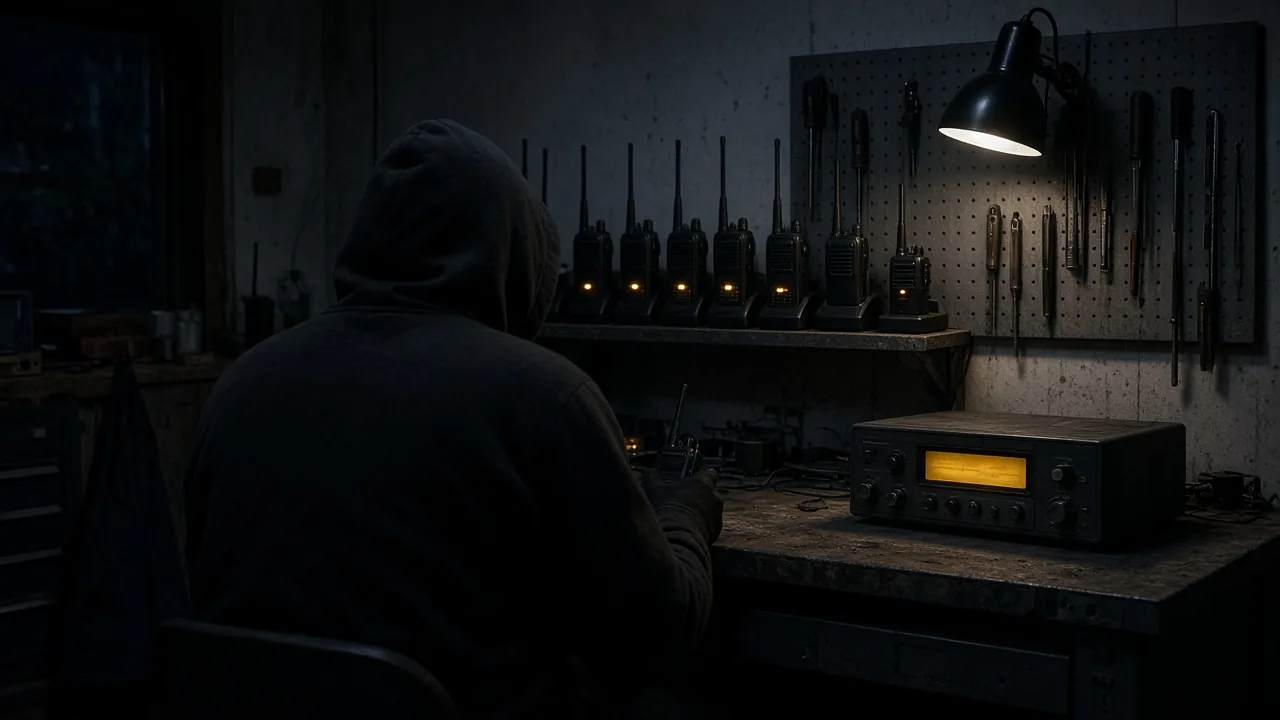
Field log, entry 060. A garage workshop. Radios lined up on a shelf. One of them hissed softly the whole time, and nobody turned it off.
The communications specialist is a licensed amateur radio operator now. I asked what really happens when the phones go down.
"First thing—they usually don't go down all at once." They jam. Everyone calls at the same time and the towers choke, so you have bars and nothing works. Texts sometimes squeeze through when calls won't. OK. Home. Will call.
And when it really is down? "Then you go back about a hundred years." Radios. Paper. Runners. A note taped to your front door is a comms system.
For a family starting out: a set of GMRS handhelds. They need a license, but it's about thirty-five dollars from the FCC, with no test, and one license covers your immediate family for ten years. Range is a mile or two in town, maybe a few miles in the open. "Not the thirty it says on the box. The box lies." And a small crank or battery radio just for listening, because hearing the news "kills half the panic."
But the radios weren't the point. The plan was. Where we meet. When we check in: top of every hour, radio on for five minutes. One person outside the area that everyone calls.
The story that proved it: a storm took everything out. A sister two towns over turned her radio on at the top of the hour, because they had agreed to it over Thanksgiving dinner. On the third try, they got through. They both cried.
"She doesn't make fun of me anymore."
Chapter 10, on communications, in Volume 2, is written for that sister. The radios are in there. The plan comes first.