 No One
The Origins · Entry 031
The Booth
Names and details changed to protect identities.
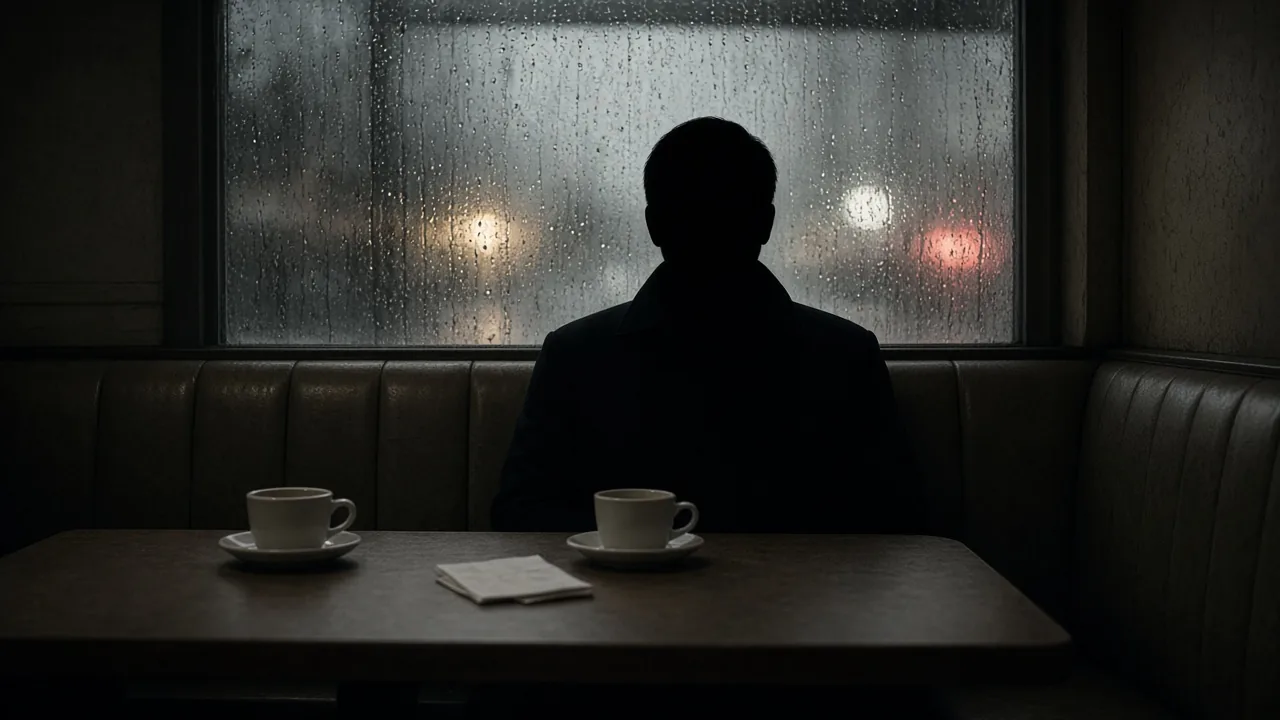
Field log, entry 031. A diner, corner booth. Rain. My guest arrived first and took the seat facing the door.
I was being studied before I had my coat off.
"You're doing it right now," said the former intelligence analyst, before I'd asked a thing. "You looked at my hands when you sat down. Everybody does it. I just do it on purpose."
I had expected tradecraft stories. What I got was a method you could teach a teenager.
"Baseline. That's the whole game." Not the TV nonsense about liars touching their noses. How do you act when nothing is wrong? How fast do you talk? Where do your hands go? "Then I watch for change. The change is the signal."
Some people are just fidgety. A brother-in-law who can't sit still for a sandwich. If he ever goes still, that's the time to worry.
There was one story, told carefully and not all the way through. A man offering help. Friendly, too friendly, with answers before the questions. His story had too many details in the wrong places: he knew the color of a car, but not what day it was.
"People who've lived something remember it messy. People who've built something remember it neat."
"What happened?"
"I didn't go with him. That's all I'll say."
The advice for ordinary people came out plain. If someone is pushing you to decide fast, slow down. Urgency is the oldest trick there is. Good people will wait. And trust the little itch. You've noticed something; you just haven't put words to it yet.
When I reached for the check, it had already been paid, at some moment I never saw.
That conversation shaped the book's chapters on reading people in a crisis. When the stores are closed and the phones are down, the stranger at your door with a friendly offer is part of the emergency, too.